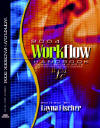
Welcome to the Workflow Handbook 2004.
This edition offers you three sections:
· SECTION 1: The World of Workflow covers a wide spectrum of viewpoints and discussions by experts in their respective fields. Papers range from an examination of the Split Personality of BPM through to Web Services workflow architectures and Business Process Management Technology with special spotlight on IT in Asia and Pacific Rim.
· SECTION 2: Workflow Standards deals with the importance of standards, with a visionary look into the future of the Workflow Reference Model. The relationship between the BPMN specification and workflow patterns is examined in detail. The draft Wf-XML 2.0 specification, discussed in ASAP/Wf-XML 2.0 Cookbook has been published in full on the Coalition website.
· SECTION 3: Directory and Appendices—an explanation of the structure of the Workflow Management Coalition and references comprise the last section including a membership directory.
ORDER FORM

Table of Contents
Foreword
Jon Pyke, Chair WfMC and Strategic Advisor to Staffware Plc., United Kingdom
Introduction
Layna Fischer, General Manager Workflow Management Coalition, United States
Download document containing short descriptions of each chapter. Five pages in PDF format
SECTION 1—THE WORLD OF WORKFLOW
The Split Personality of BPM
Derek Miers, Enix Consulting, United Kingdom
Metrics Based Business Process Management
Tommy Hansen, Mike Marin and Khoi Dang, FileNet, United States
Web Services Orchestration and Management Through Intelligent BPM
Setrag Khoshafian, Ph.D., Pegasystems Inc., USA
Workflow-based Business
Stefan Junginger, BOC Information Technologies Consulting GmbH, Germany; Harald Kühn and Franz Bayer, BOC Information Systems GmbH, Austria; Dimitris Karagiannis, University of Vienna, Austria
Workflow Implementation of Change Lifecycle for Product Configuration Management
P Jiang, J Newman, Q Mair, E Valfre, J-F Calm, C Wiles, G Segarra, I Viglietti, F Feru, T Visnovec & K Causse
Adaptive Process Management
Eric Y. Shan, University of California, Berkeley, California; Fabio Casati and Ming-Chien Shan, Hewlett-Packard Laboratories, Palo Alto, California
Scorecard-based Process Controlling Linking Business Objectives to Workflow Execution
Joerg Becker, Tobias Rieke; University of Muenster, Germany
Workflow and Business Process Outsourcing: Friend or Foe?
Narinder Singh, webMethods Workflow, United States
Workflow Management Middleware for Secure Distance-Spanning Collaborative Engineering
Tim Schattkowsky, Wolfgang Mueller, Adam Pawlak; C-LAB, Paderborn, Germany; Silesian University of Technology, Gliwice, Poland
Optimizing Rehabilitation Patient Scheduling Using Process-Simulation
Varun Panchapakesan, CACI, Inc., United States
Collaboration-enabled Process Management (CPM)
Martin Ader, W&GS, France
Spotlight on the Pacific Rim
Asia-Pacific: The Next Frontier for BPM
Linus Chow, Regional Director, HandySoft Global Corp., Asia-Pacific; Ken Loke, Director, Bizmann Systems, SE Asia; Suraj Goyal, Deputy GM, Datamatics Technologies, India.
Workflow in Japan: When Tradition Meets Technology
Dr. Geoffrey Long, KAISHA-Tec, Japan
Cooperative Fragment-driven Workflow Modeling Methodology and System
Kwang-Hoon Kim, Dong-Keun Oh, Jung-Hoon Lee, Jae-Kang Won, Hyong-Mok Kim; Kyonggi University, South Korea
An Intelligent and Personalized Enterprise Process Portal
Chi-Tsai Yang and Bin-Shiang Liang; Flowring Technology, Taiwan; Shung-Bin Yan and Feng-Jian Wang: Computer Science and Information Engineering National Chiaotung University, Taiwan
SECTION 2—WORKFLOW STANDARDS
ASAP/Wf-XML 2.0 Cookbook
Keith D Swenson, Fujitsu Software Corporation, United States
This paper is for those who have a process engine of some sort, and wish to implement a Wf-XML interface. At first, this may seem like a daunting task because the specifications are thick and formal. But, as you will see, the basic capability can be implemented quickly and easily. This paper will take you through the basics of what you need to know in order to quickly set up a foundation and demonstrate the most essential functions. The rest of the functionality can rest on this foundation. The approach is to do a small part of the implementation in order to understand how your particular process engine will fit with the protocol.
Creating Process Efficiencies by Combining BPM and BPO
Bob Puccinelli, DST Technologies, Inc., United States
Workflow Service Provider with XPDL
Arnaud Bezancon, ADVANTYS, France
Process Modeling Notations and Workflow Patterns
Dr. Stephen White, IBM Corp., United States
The Workflow Reference Model: 10 Years On (570kb PDF)
David Hollingsworth, Fujitsu Services, United Kingdom; Chair, Technical Committee, WfMC.
Last year saw the 10th anniversary of the Workflow Reference Model. This short paper reassesses the relevance of the Model in the current context of Business Process Management. It discusses the principles behind the Model, its strengths and weakness and examines how it remains relevant to the industry today. It concludes by introducing a number of considerations required to establish a “BPM Reference Model” and discusses how the various overlapping standards in this space may be categorised.
SECTION 3—DIRECTORIES AND APPENDICES
WfMC Structure and Membership Information
Appendix—Author Biographies
Appendix—Membership Directory
Appendix-Officers and Fellows
Index
Other Resources
ORDER FORM
|